
Zero-to-Production QA in 3 Months — 97% Faster Regression, 53/53 Critical Flows Automated
At-a-Glance
Coverage: 53/53 P0 revenue-critical flows automated (100%)
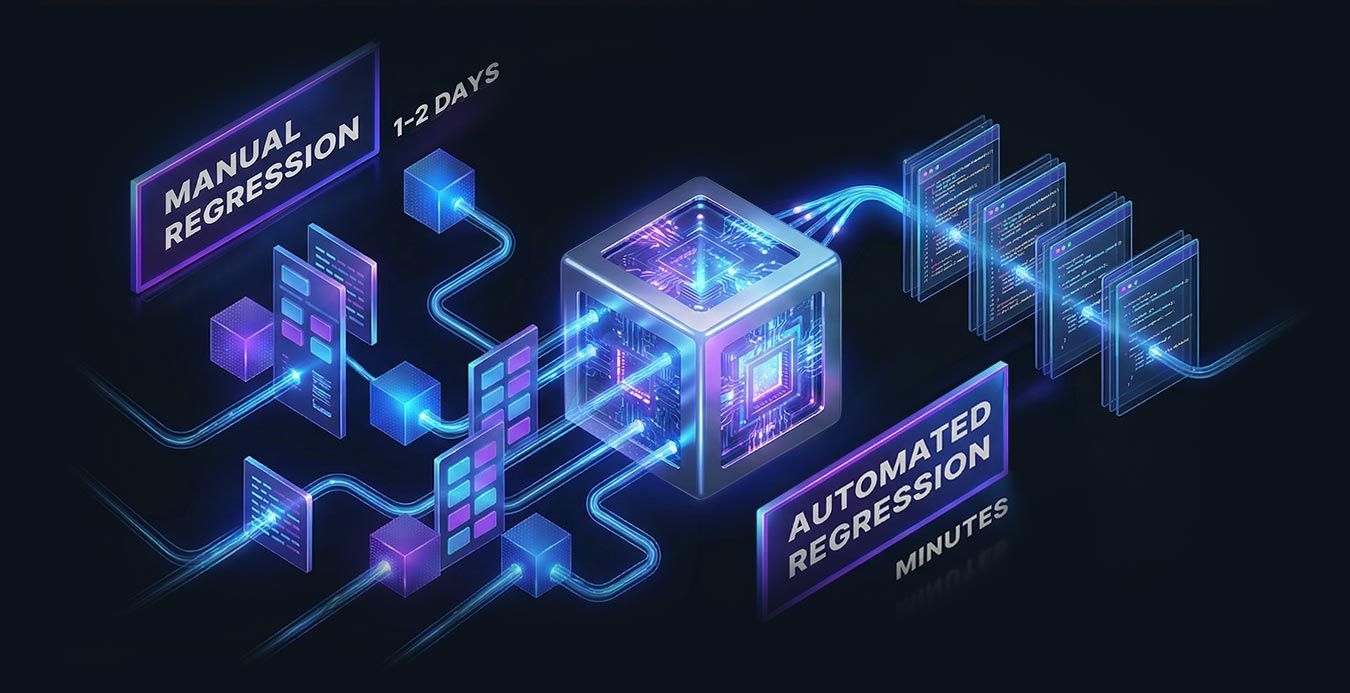
Regression Time: 16 h → 30 min (−97%)
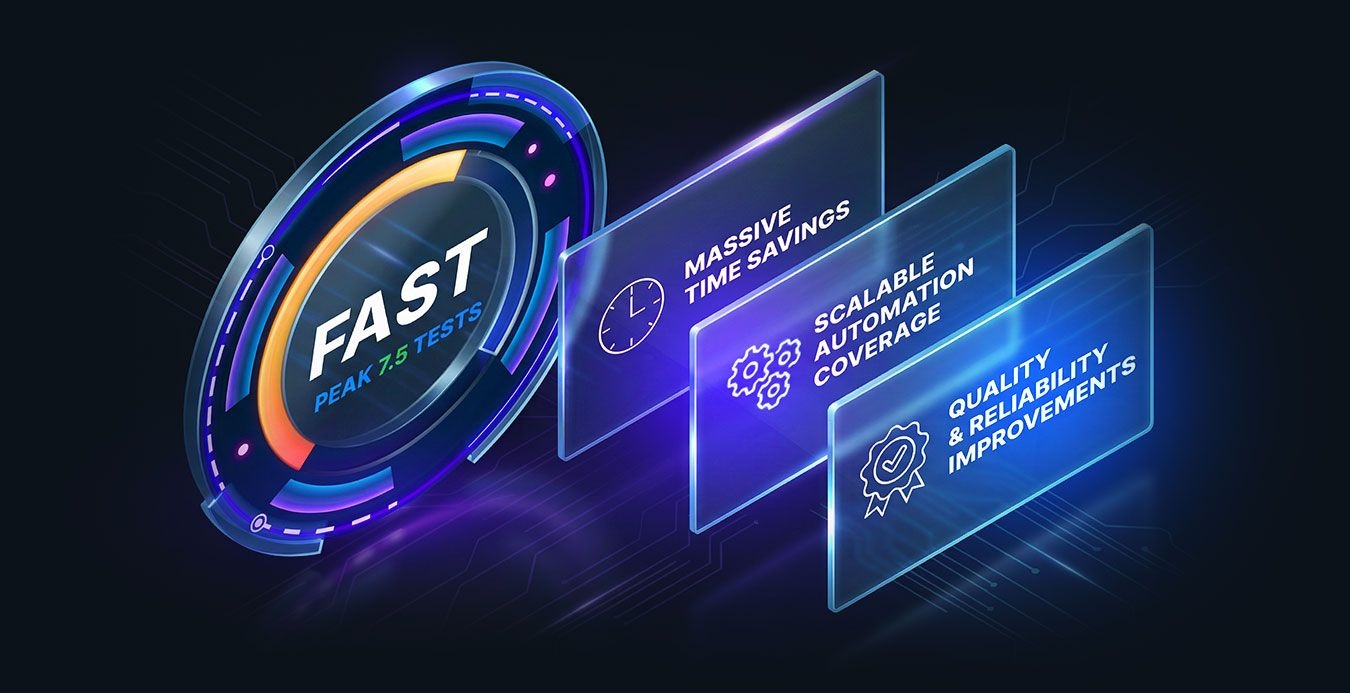
Velocity: 3.2× average improvement (peak 7.5 tests/week)
Stability: 95% local pass rate; ~85% CI (improving through Q1 2026)
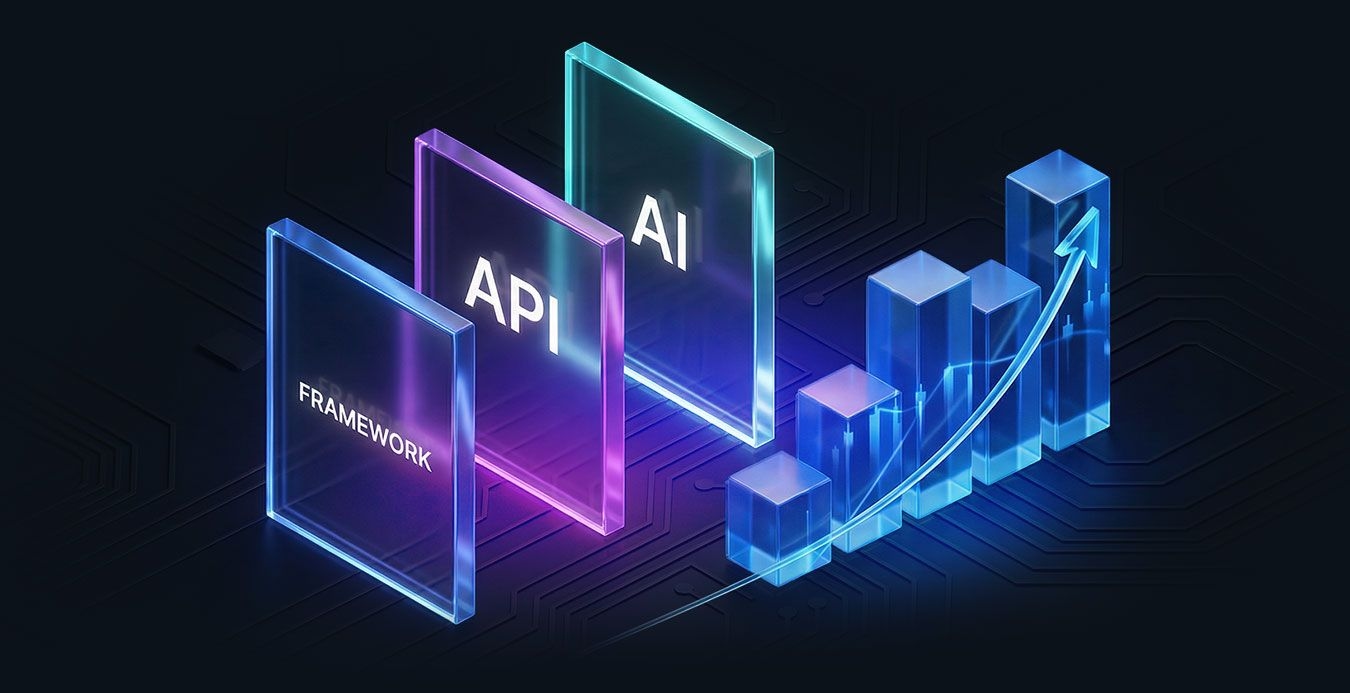
Levers: API-first validation (85% API / 15% UI), AI-assisted development (~60% of framework; ~50% of tests)
Timeline & Team: Zero → production-ready Oct–Dec 2025 by a lean 2-person team
Stack: Playwright (TypeScript), CI/CD, Qase.io, Cursor AI, Playwright MCP
The Situation
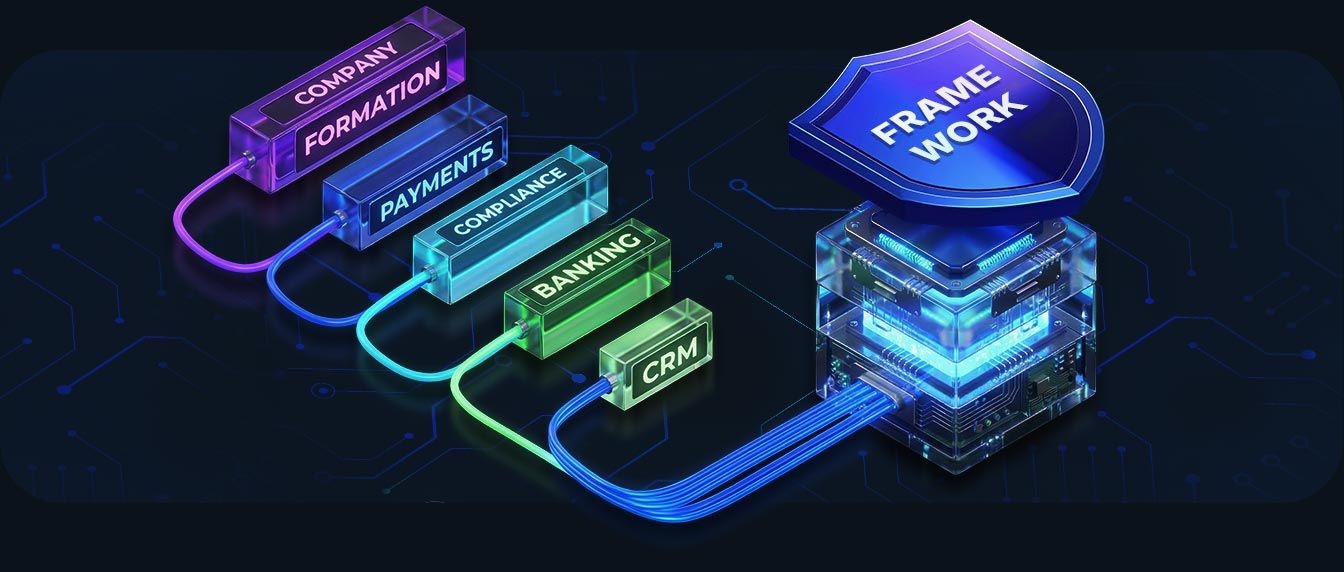
SageCompany is an enterprise SaaS platform (formation, compliance, payments, banking, CRM). Testing was largely manual with a handful of unstable UI tests, no API-level validation, and frequent UI changes—making tests brittle, slow to build, and expensive to maintain. Third-party dependencies (Stripe, Salesforce) introduced flakiness and long debug cycles. There was no structured framework and no AI in the toolchain.
Goals & Objectives
Stand up a production-ready Playwright + TypeScript framework from scratch
Automate 53 P0: end-to-end flows tied to revenue
Cut regression from 1–2 days to minutes
Stabilize around Stripe and Salesforce integrations
Increase delivery velocity via AI-assisted development
What We Did (challenge → lever → effect)
1. No automation foundation → Framework-first, API-first architecture
Built a clean Playwright/TS framework with API abstraction, component library, and shared fixtures/utilities
Validated via API for ~85% of checks; kept UI to the true user path (~15%)
Effect: Fast, stable tests that don’t break on cosmetic UI changes
2. Complex third-party flows → Mocking & direct API verification
Stabilized Stripe flows with API mocks; verified backend state via platform APIs
Tamed Salesforce sync with direct validations and contract checks
Effect: Lower flake; shorter debug time on the hardest integrations
3. Tight timeline, lean team → AI-assisted delivery
~60% of framework and ~50% of tests AI-assisted (Cursor, Copilot, Playwright MCP)
Effect: 3.2× average velocity; 7.5 tests/week peak without adding headcount
4. Weekly UI change → Reusable components & stable selectors
Componentized UI, standardized patterns, deterministic locators
Effect: Maintainability up; fewer locator breakages
5. Slow feedback → CI pipeline with quality gates
CI orchestration, artifacts, dashboards; improving CI stability (→ 85%+)
Effect: Minutes-level feedback; visible trends and faster merges
In three months, SageCompany went from zero usable automation to a production-ready platform that ships faster, with dramatically less manual effort—and protects every critical flow.
Timeline & Team
Oct: Framework & architecture; API abstraction; component library
Nov: Acceleration; API-first coverage; AI-assisted authoring standard
Dec: All 53 P0 flows automated; stabilization; CI dashboards live
Team: 1 QA automation engineer (full-time) + part-time delivery management
Engagement model: Managed Delivery with weekly demos, two-week cadence, one shared backlog
Why It Worked
Architecture first, migration second—no lift-and-shift of brittle patterns
AI where it matters—authoring, selectors, and reviews; humans keep judgment
Contracts + components—stability across third-party APIs and complex UI
Transparent CI—faster feedback and a single source of truth for quality

“It’s rare to find a partner who blends real technical depth with an equally sharp grasp of our business goals.”
Sage Company Team
Looking Ahead
Next, we’ll broaden coverage where it matters—expanding component-level and API suites across high-impact flows. We’ll scale AI-driven test generation as the default path for new scenarios, while increasing CI parallelization and adding test-impact analysis to cut wall-clock times. Automation will wire deeper into deployment gates (pre-merge, pre-prod, post-deploy smoke) to harden go/no-go decisions. Target outcomes: ≥90–95% CI stability, <10-minute build verification, and regression that stays measured in minutes, not days.
API-first automation that protects every critical flow.
What should we accelerate next?
Let’s redefine what quality can look like for your team.